A note from one of our founders, Raul Guerra…
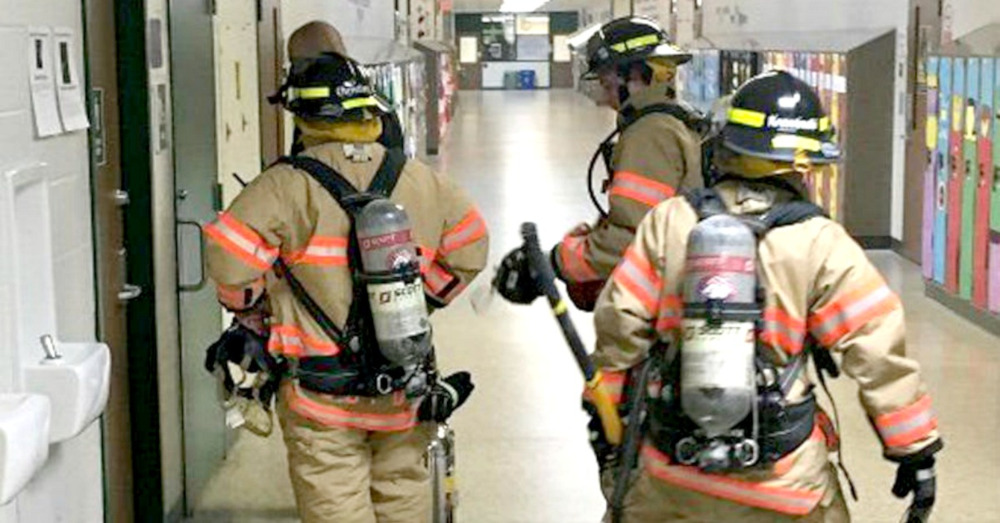
I recently spoke with a (now retired) Fire Chief who told me the main reason he’s become a strong advocate for in-building Emergency Responder Radio Coverage (ERRC) systems is because the most frequent 1st responders inside commercial buildings are EMTs responding to calls for stroke, heart attack, or injury.
The problem is that EMTs are generally directed by a physician as an extension of his/her license, and if they cannot reach a physician to begin immediate treatment, (2-way radio or phone won’t work from inside the building) they lose valuable time, the golden hour, moving the patient outside the building.
Attention Tenants and CREs! Ask the building owner if the property has been tested to ensure first responders are able to communicate via their 2-way radios from inside the building.
Attention Building Owners! Building owners need to ensure that EMTs are able to communicate from inside the building as a critical life safety feature for every tenant and occupant of their building.
If you would like to have your building tested for 2-way radio communication contact us!
You’re an architect or engineer who wants to be in full compliance with local fire code for Emergency Responder Radio Coverage (ERRC) IFC 510 and NFPA 72/1221.
As you read the code requirements you ask, “Who is the Authority Having Jurisdiction” who will approve the ERRC system for this project?
Is it:
- the fire marshal,
- building planning department,
- permitting department,
- building inspection department,
- the city radio techs,
- all of the above?
If you answered “f,” you’ve probably had experience working with different jurisdictions on meeting the local ERRC fire codes.
The title “authority having jurisdiction,” or AHJ, covers a variety of regulating fire codes. NFPA officially defines AHJ as “the organization, office, or individual responsible for approving equipment, materials, an installation, or a procedure.”
So, how do you know who all the AHJs is who will certify your ERRC project? Best answer: get experienced help. There’s no single source that lists every AHJ for every project type and location.
Understanding the AHJ’s ERRC commissioning requirements is critical because failure to meet code could lead to fines or withholding the building CO. Work with a partner who understands ERRC fire codes. R.guerra@ibtconnect.com | www.ibtconnect.com
Today, it is imperative that building owners, architects, specifiers, and MEP engineers understand the recent additions to the International Fire Code (IFC) and National Fire Protection Association (NFPA) for in-building Emergency Responder Radio Coverage (ERRC). These new fire codes were added to ensure that First Responders can reliably use their 2–way radios from anywhere in a building. For new construction, this is a requirement in order to receive a Certificate of Occupancy. For existing buildings, the Fire Marshal can provide a window of time to meet this new requirement.
Today there are over 5.6 million buildings in the US and according to the International Association of Fire Chief, a large percentage of buildings have not been tested to ensure critical 2-way wireless radio communication can happen. That means in the event of an in-building emergency like a fire, assault, an accident, or health emergency, 1st responders who enter the building may be cut off from talking to each other or the command center which could result in loss of life, property and harm to 1st responders.
How can you be assured that your building meets the new emergency responder radio signal standards?
- Have your building tested by a Public Safety DAS or Emergency Responder Radio Coverage (ERRC) systems integrator (see www.ibtconnect.com).
- IBT Connect will work with your local jurisdiction to find out: 1) the emergency broadcast frequencies used by the jurisdiction, 2) signal coverage standards (square feet and signal strength dBm).
- IBT will then perform a site-survey using a spectrum analyzer or radios from the jurisdiction.
- Results: Test results are provided to the building owner and the jurisdiction. If the building passes, a certificate is issued showing that the building meets code. If the building fails, the building owner is responsible for installing an Emergency Responder Radio Coverage System (aka Public Safety DAS).
Mitigate your risk…don’t wait for an actual emergency to find out if your building blocks first responder radio signals and does not meet code. We all would like to be interviewed on the 5 o’clock news—but not for the wrong reasons.
For more information, contact IBT Connect www.ibtconnect.com 972.947.5801 or Raul Guerra at 214-208-8022.
In an emergency, first responders use their 2-way radios as a lifeline. The emergency signal system is used by firefighters and law enforcement officers to get directives from the command center, as well as communicating conditions and locations with each other. EMTs use the emergency signal system to communicate with the ER for diagnostics and approvals to perform life-saving procedures. But, if first responders cannot communicate from inside a building, their lives and the lives of occupants may be at risk and the liability will be spread to all involved with design, specification, permitting, construction, engineering and operations — with ultimate responsibility going to the building owner.
New Building Codes
Building owners expect their architects, specifiers, General Contractors, and building engineers to meet local building codes which they faithfully do for fire alarms, sprinklers, alarm panels, fire lanes, electrical, etc. However, many of these construction professionals are unaware of a new fire code that requires in-building testing for Emergency Responder Radio Coverage (ERRC) to ensure first responders’ 2-way radios work from inside the building.
This new building code (IFC 510 / NFPA 72 Section 24) applies to buildings over 50,000 square feet and includes parking garages, basement levels, stairwells, and elevators. The code requires buildings be tested to ensure first responder radios work throughout 95% of the building. If the building does not meet this requirement, a signal booster or Bi-Directional Amplifier (BDA) is needed to fix the problem.
LEED Design and Construction
Today’s building standards emphasize Leadership in Energy and Environmental Designs (LEED). But the construction materials (low-e glass, metal cladding, metal roofs, brick, and masonry) used to block ultraviolet (UV) and infrared heat, also block radio waves which means first responders are unable to use their radios from inside the building.
Installing a Code-Compliant Communication System
A great way to make sure your building complies with first responder codes is by working with an experienced wireless systems-integration partner. IBT Connect (www.IBTConnect.com) tests buildings so that building owners, architects, engineers, and contractors can plan for a booster system if needed. Consequences of testing after construction is complete can be costly and can result in fines or holding the Certificate of Occupancy (CO). IBT finds the public safety frequencies in your area and designs and deploys a system that meets all jurisdictional coverage testing protocols and FCC guidelines.

 Many types of buildings, like multi-family, commercial offices, hotels, hospitals, warehouses, schools, etc., are prone to having poor cell phone reception and the causes for losing cell signal can vary:

